Sanding, installation and repair across the metro. $2.75 – $5.50 per sq ft for a sand and finish, measured, not estimated.

Seven groups, 40 pages. The cost pages carry real ranges for this market rather than a national average, because Iowa sits below the coastal numbers and a national calculator will overquote you by a third.

A full sand takes your floor back to bare wood in three passes, 36, 60 then 80 grit , followed by an edger at the walls and a buffer to blend the machine marks. We read moisture first and expect 6 to 9 percent before a belt touches oak. Finish goes down in two or three coats, and a ¾ inch solid floor has four to six sandings in it over a lifetime.
$2.75 – $5.50 per sq ft

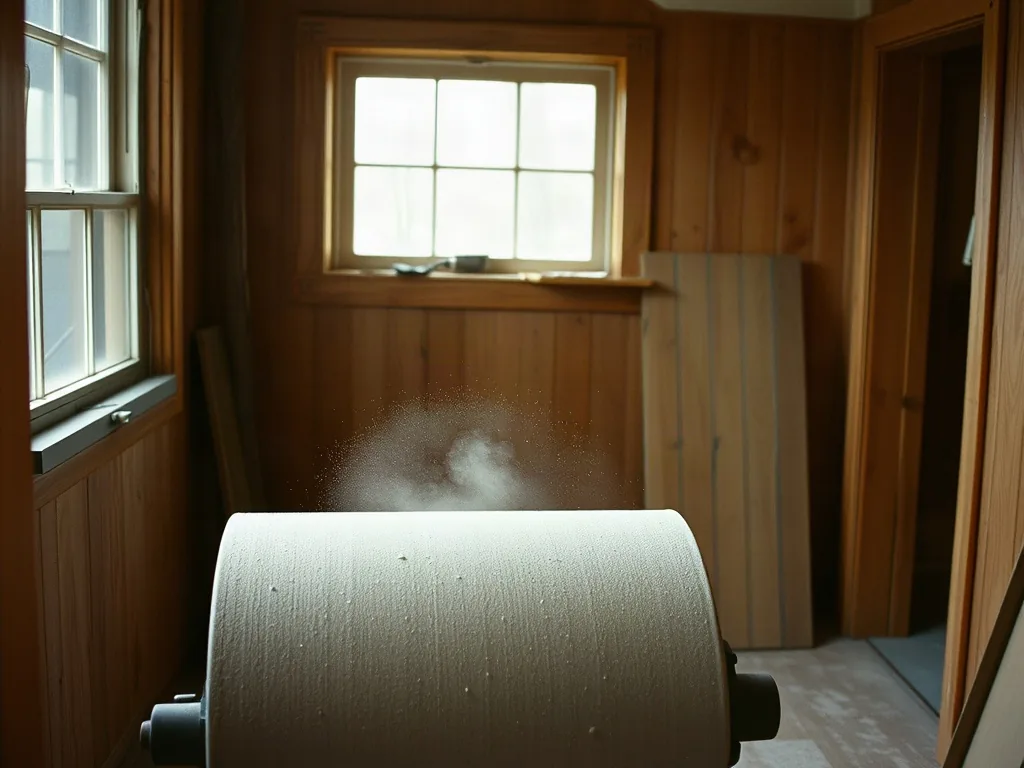
Every machine runs a sealed shroud into a HEPA extractor rated below one micron, so most of the dust leaves the house instead of settling on it. Contained is the honest word, not dustless, the edger and the hand scraping at radiators still release perhaps 5 percent of it. We tape doorways and cover furnace returns, which matters more than the vacuum itself.
$3.50 – $6.50 per sq ft

The complete system: three-pass sand at 36, 60 and 80 grit, a sealer coat, then two coats of finish. Water-based Bona Traffic HD is walkable in 24 hours and low odour; oil-based polyurethane ambers over time and needs longer between coats. Both reach full cure at 14 days, which is when rugs and heavy furniture can go back.
$2.75 – $5.50 per sq ft

A buffer with a 120 grit screen abrades the existing finish just enough for a fresh coat to bond, and removes no wood at all. That makes it the only option for a floor already sanded four or five times. It works when the finish is worn but the wood beneath is clean, any grey or black staining in the boards means a recoat will not touch it.
$2.00 – $4.00 per sq ft

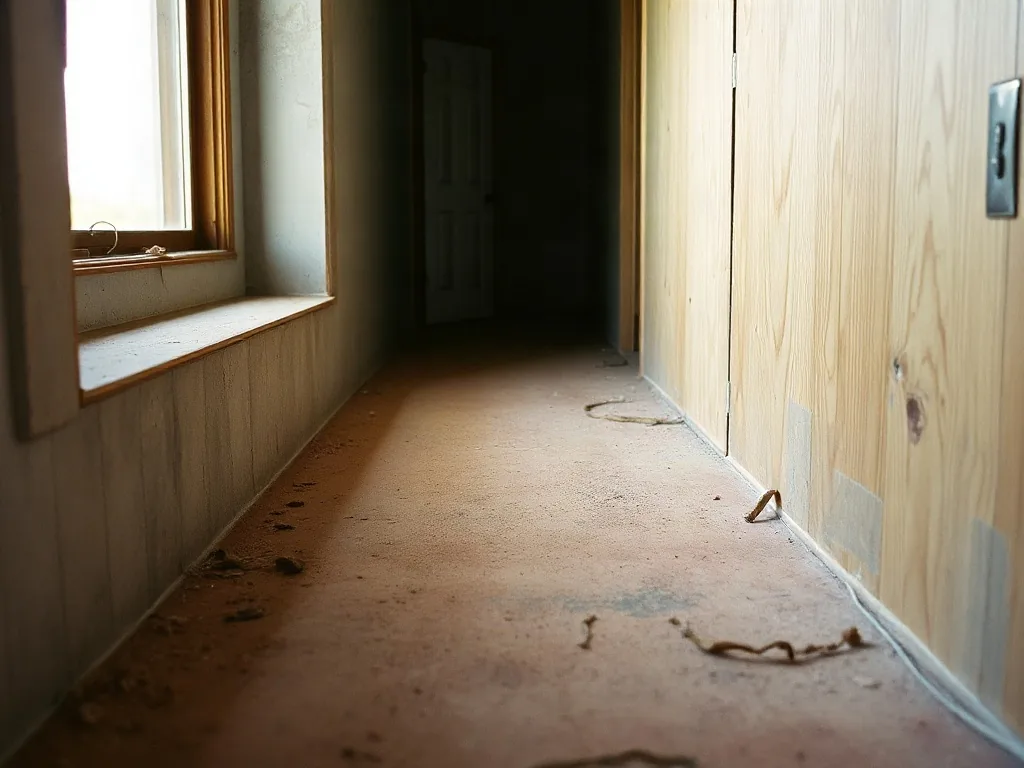
Older Des Moines floors are usually 2¼ inch red oak strip laid in the 1920s and 30s, often under two or three later coverings. Restoration means pulling carpet staples and tack strip, replacing boards that cannot be saved, flattening the field, and only then sanding. Carpet protects wood from sunlight and grit, so what comes up is frequently in better shape than expected.
$2.75 – $5.50 per sq ft

Solid ¾ inch strip or plank nailed down with 16-gauge cleats every 8 to 10 inches into a flat, dry subfloor. Wood acclimates in the room for a week and goes down at 6 to 9 percent moisture content, skipping that week is why an August floor opens gaps by February. Installed properly, a solid floor outlasts the mortgage.
$7 – $12 per sq ft installed

Cross-laid plies under a real wood wear layer, which is what stops the board curling when the humidity below differs from the air above. Over an unconditioned Des Moines basement that is not a compromise. It is the correct construction. Ask about wear layer thickness: 2mm takes one future sanding, anything thinner takes none.
$6 – $10 per sq ft installed

Fully waterproof click-together plank over a flat subfloor, chosen where real wood would fail, basements, laundries, bathrooms, rentals. A 20 mil wear layer handles dogs and traffic; 12 mil is a budget floor. It will never be refinished and never be wood, and in the right room that is the right answer rather than a downgrade.
$4 – $7 per sq ft installed

The floor locks to itself and rests on the subfloor rather than being fastened to it, moving as one sheet with the seasons. That demands a ¼ to ½ inch expansion gap at every wall, pipe and doorway, hidden by the base shoe, and a break at every doorway over about 25 feet of run. A fixed transition strip run across a floating floor is a guaranteed buckle, and it is the fault we are called out to most.
$6 – $10 per sq ft installed

Plank bonded directly to concrete or plywood with a moisture-control urethane adhesive, which doubles as the vapour barrier over a slab. It gives the most solid underfoot feel of any method and the least hollow sound. Slabs need under 3 pounds per 1,000 square feet in 24 hours on a calcium chloride test, so the slab has to be tested first, a calcium chloride or RH probe reading decides whether the adhesive is enough on its own.
$6 – $10 per sq ft installed
Every page carries the same detail and a real price for this market.

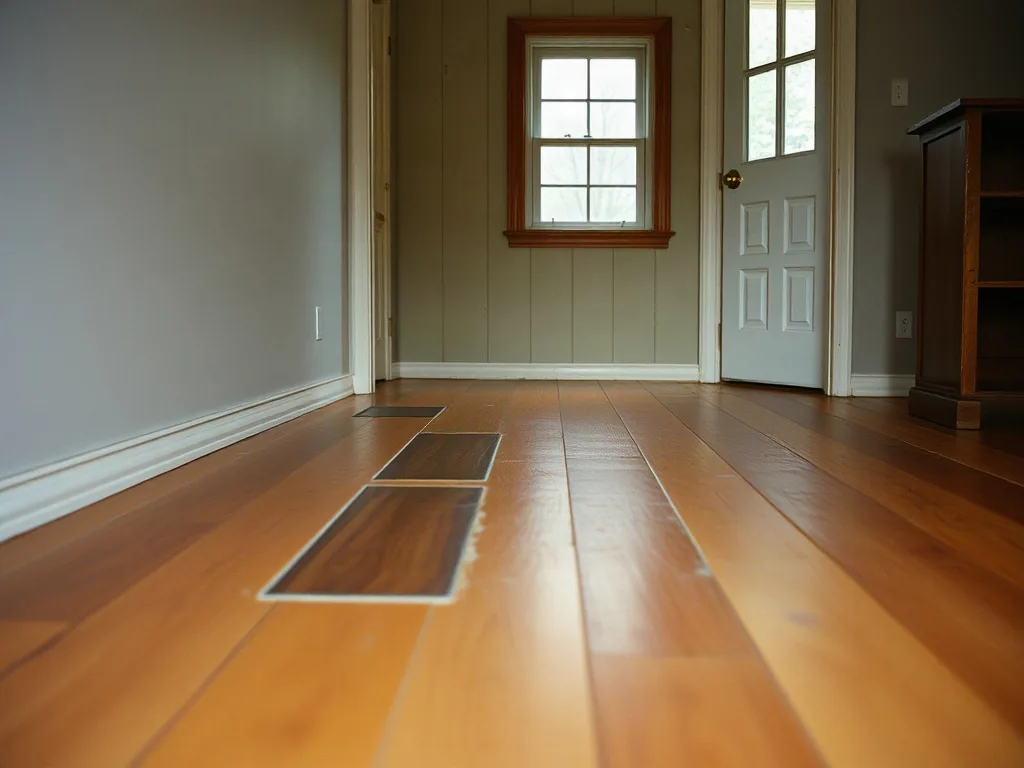
Damaged boards are cut out and woven in so the joints stagger with the surrounding field rather than forming a visible rectangle. Matching 1920s red oak means hunting the right width and grain, usually 2¼ inch at 3/4 thickness. A repair only truly disappears once the room is refinished, new wood under an old finish always reads as a patch, however well it is matched.
$8 – $20 per board replaced

Each board is scored, split out and lifted without disturbing the tongue of its neighbour, then a replacement is fitted with the bottom groove removed so it drops in from above. Species, width and grain direction all have to match. Costs run per board rather than per square foot, so a End joints stay staggered by at least 6 inches.handful of bad boards is a cheap fix.
$8 – $20 per board replaced

The order is dry, flatten, then replace, reversing it wastes the work. We meter the boards and the subfloor and wait until both sit at 6 to 9 percent, which can take weeks with fans. Mild cupping often flattens on its own once the moisture source is gone; sanding a cupped floor flat in February means it crowns the other way by July.
$500 – $3,000 per room

A squeak is movement between the flooring, the subfloor and the joist. From above, a counter-snap screw system drives a fastener and breaks it off below the surface for filling. From below, shims and construction adhesive at the joist do it invisibly, typically on 16 inch centres. A squeak that wanders across a room is a subfloor problem; one in a single spot is a loose board.
$200 – $600 per room from above

First the diagnosis, because the fix depends entirely on it. Even gaps across the whole floor in January are seasonal, close by June, and filling them in winter only pushes the filler out in spring. A seasonal gap should not hold a dime on edge, about 1/16 inch. One wider than that in a tight floor, or a gap that never closes, points at moisture underneath , in this metro, almost always the basement.
$250 – $700 to dry and re-flatten one room
Every page carries the same detail and a real price for this market.

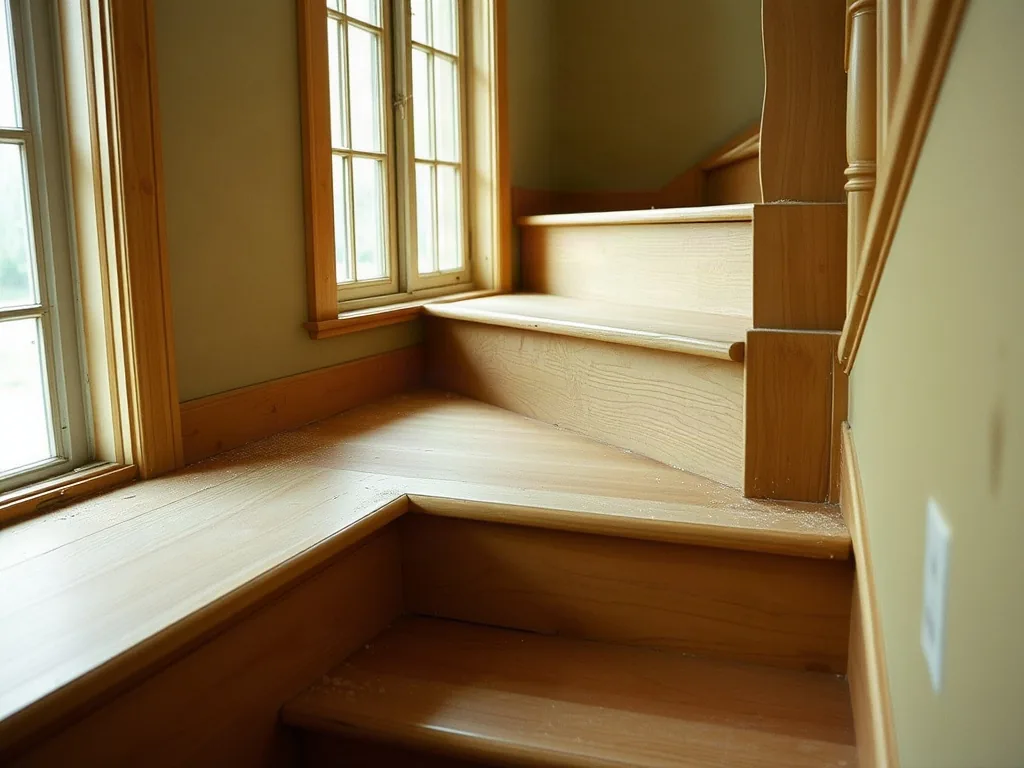
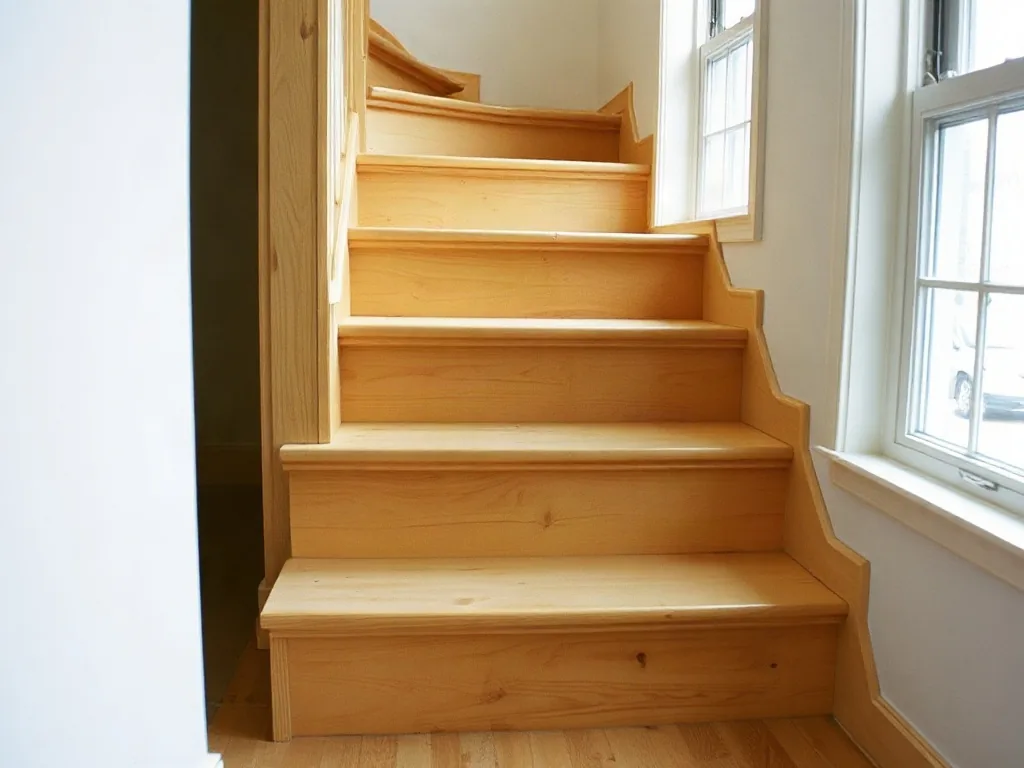
Treads, risers, stringers and nosing, sanded almost entirely by hand because no machine reaches an inside corner. A single step takes roughly as long as 40 square feet of open floor, which is why stairs are priced per step for that reason. They also take the heaviest wear in the house, so the finish spec matters more here than anywhere, a commercial-grade water-based coat is worth it.
$45 – $85 per step

New treads and risers cut, mitred and fitted to the existing stringers, with returns on the open side so the end grain never shows. Rise and run have to stay consistent within 3/8 inch across the flight or the stairs feel wrong underfoot and fail inspection. Retrofitting over carpeted stairs usually means new treads rather than refinishing the old ones.
$100 – $220 per step

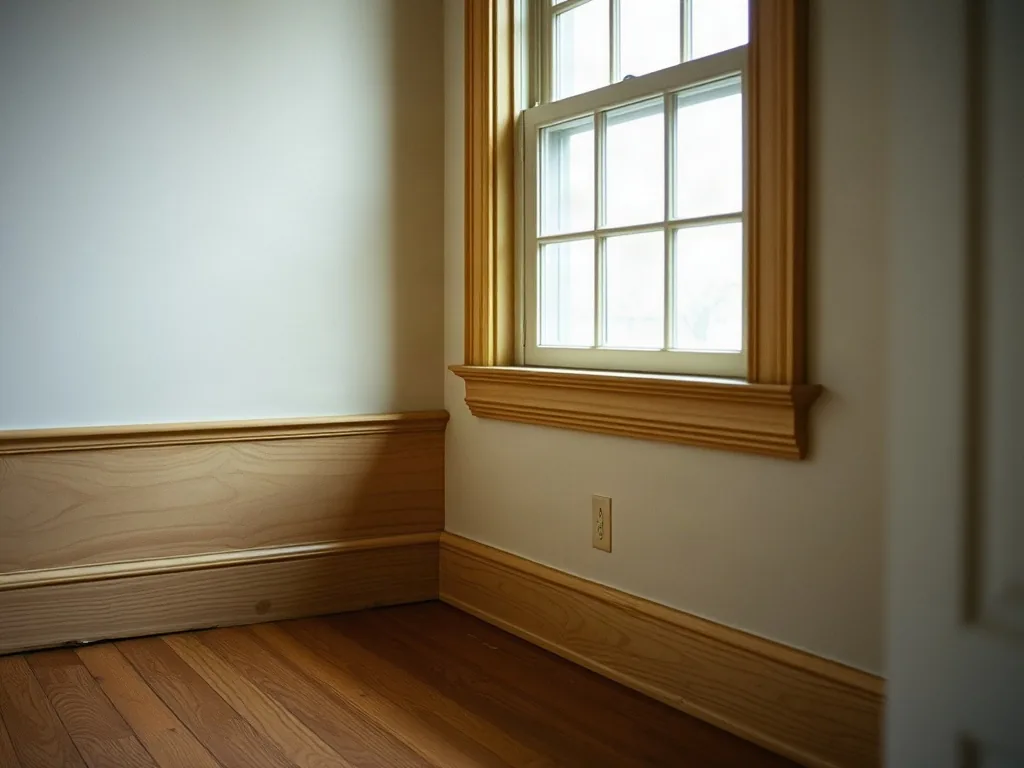
The trim that covers the expansion gap the floor needs. Base shoe or quarter round is nailed to the baseboard, never to the floor, pinning it down defeats the gap and the floor buckles. We pull the shoe before sanding and reset it after, which is why a refinished room has no paint line The gap it hides runs 1/2 to 3/4 inch at every wall.along the bottom of the base.
$4.50 – $7 per linear foot installed

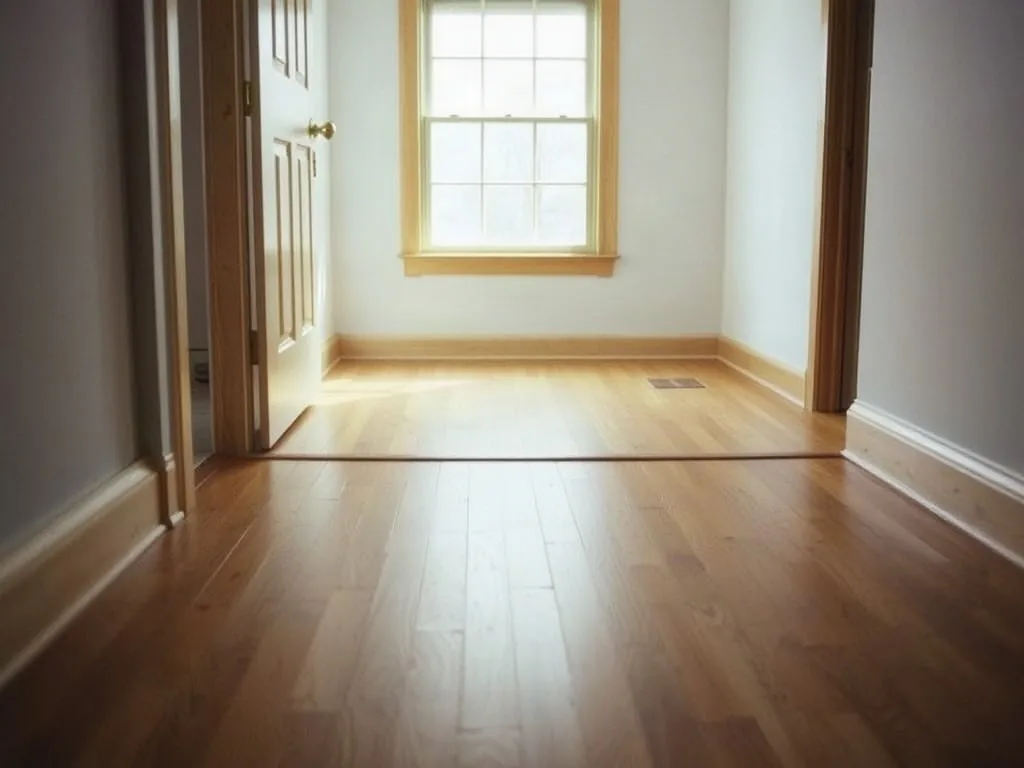
Where one floor meets another, the detail is decided by the height difference and by whether either floor is floating. Reducers handle drops over 1/4 inch, T-mould handles equal heights, flush transitions handle everything under that. A floating floor needs a break at every doorway; running trim solidly across one is the single most common cause of a buckled laminate or LVP floor.
$45 – $120 per doorway

Colour is sampled on your floor, in your room, under your light, a chip from a fan deck lies. Red oak has open pores and takes Duraseal evenly. Maple is dense and blotches unless it is water-popped first, with water at about 120 degrees, raising the grain so the stain can key in. Grey on red oak needs a reactive stain, because the wood's pink undertone fights it.
$2.75 – $5.50 per sq ft

Bona Traffic HD and Loba 2K Supra are two-component water-based finishes that stay clear rather than ambering, dry fast enough for two coats in a day, and carry very low odour. That makes them the sensible choice in an occupied house. Socks at 24 hours, shoes at three days, rugs at fourteen, the last number is the one people ignore.
$2.75 – $5.50 per sq ft

Traditional polyurethane, warmer in colour and it keeps ambering for years, which is exactly right on old red oak and wrong on white oak you want to stay pale. It is more forgiving to apply and cheaper per coat, but each coat needs 8 to 12 hours and the solvent smell means most people leave the house for a couple of days.
$2.75 – $5.50 per sq ft

Rubio Monocoat and similar penetrate the wood rather than forming a film on top, so the floor feels like wood underfoot instead of plastic. The real advantage is repair: a scratch is spot-fixed with a cloth and more oil, no sanding of the whole room. The trade is maintenance, it wants Expect to re-oil every 2 to 5 years in a busy household.re-oiling every few years in a busy household.
$2.75 – $5.50 per sq ft

Sheen is measured in gloss units at 60 degrees: matte around 15, satin 35 to 40, semi-gloss 55, gloss above 70. The lower the sheen, the less it shows dust, footprints and every dent. Satin is what most Des Moines houses end up with because it hides normal life; gloss looks spectacular for about a week in a house with a dog.
$2.75 – $5.50 per sq ft

What a sand and finish actually runs here, room by room, and what moves the number: square footage, stairs, a dark stain, and how many times the floor has been sanded before. Below about 400 square feet the minimum charge dominates, because dust containment and machine setup cost the same whether the room is small or large.
$2.75 – $5.50 per sq ft

Material plus labour, and the split is closer to even than people expect. Solid oak, engineered and LVP land in different brackets, and the subfloor underneath can add more than the choice of wood does. Iowa sits below the coastal rates, so a national online calculator will typically Levelling beyond the 3/16 inch in 10 feet tolerance adds more than the wood choice does.overquote a Des Moines job by around a third.
$7 – $12 per sq ft installed

A thousand square feet is roughly a main floor in a Beaverdale or Drake bungalow, living room, dining room, hall and two bedrooms. At our rate that is a predictable bracket, and the variables that move it are stairs, closets, a stain step and whether the base shoe comes off. We measure Typically 4 to 5 days on site.before quoting rather than estimating from a photo.
$2.75 – $5.50 per sq ft

A 12 by 12 bedroom is 144 square feet, which sounds cheap per foot and is not, because setup does not scale down. Sealing doorways, moving machines in and mixing finish takes the same time in a small room as a large one. Doing two or three rooms in one visit is where the per-foot price genuinely drops.
$2.75 – $5.50 per sq ft

Refinishing runs about a third of replacing, so the question is only whether there is enough wood left. Pull a floor register and look at the cut edge: roughly 3/32 of an inch above the tongue means another sanding is safe. Visible nail heads in the field of the floor mean there is not, and then replacement is the honest answer.
$2.75 – $5.50 per sq ft to refinish against $7 – $12 per sq ft installed to replace
Every page carries the same detail and a real price for this market.

Des Moines swings from about 70 percent relative humidity in July to under 25 percent indoors in January once the furnace runs, and wood changes size with it. That is a wider swing than most of the country. Holding the house between 35 and 50 percent through winter is the single most effective thing an owner can do for a wood floor.

Seasonal gaps appear across the whole floor, sit roughly the same width everywhere, and close again by late spring. That floor is healthy. A single wide gap in an otherwise tight field, or one that never closes in summer, is a different problem entirely and points at moisture or a floor Seasonal gaps rarely exceed 1/16 inch.laid at the wrong moisture content.

Cupping means the board edges sit higher than the centre, and it happens when the underside is wetter than the top. A difference of 4 percent moisture content top to bottom is enough. In this metro that is nearly always an unconditioned basement pushing summer humidity up into the floor while air conditioning dries the room above. Fix the moisture first, sanding a cupped floor flat only moves the problem.

Calcium and magnesium chloride tracked in from the driveway dry into an alkaline crust that etches the finish chemically and abrades it underfoot. The white haze people try to mop away is usually the damaged finish itself. One mat outside and one inside long enough for two full steps, plus a rag by the door, prevent a repair costing several hundred dollars per entry, every winter.
$2.00 – $4.00 per sq ft

Most houses here have one, and a basement is a humidity source. Solid wood laid above an unconditioned basement cups, and no quality of carpentry prevents it. Engineered construction resists it because the cross-laid plies fight each other. Put a hygrometer down there and read it in August: sustained readings above 60 percent are the answer.
$6 – $10 per sq ft installed
Every page carries the same detail and a real price for this market.
What is already on your floor decides most of the plan. These six cover almost every house in this metro, and they behave differently under the machine and under stain.

The default in Des Moines. Open grain hides wear, takes stain evenly, and every supplier stocks it.

Tighter grain, cooler tone, and what most people asking for a modern floor actually want.

Hard and pale. Beautiful clear-coated, difficult to stain evenly, blotches if it is not water-popped first.

The hardest common domestic species and the most variable in colour. Hides dents, shows character whether you wanted it or not.

Dark, soft for a hardwood, and expensive. Marks more easily than people expect.

Oak-like grain, lighter. Getting rarer as the borer works through the Midwest.
Des Moines swings from 70% summer humidity to under 25% indoors in January. Wood moves with it. A floor laid at the wrong moisture content in August opens gaps by February wide enough to lose a coin in, and closes them again by June. The fix is not a different product. It is acclimating the wood to the house for a week before a single board goes down, and reading the subfloor with a moisture meter rather than a thumb.
Every hardwood floor in Iowa gaps in winter. The question is whether it gaps evenly. Even seasonal gaps close in spring and mean nothing. One wide gap in the middle of a room means the floor was laid too tight or too wet, and that does not close.
Most Des Moines houses have a basement, and a basement is a humidity source. Solid hardwood over an unconditioned basement is how cupped boards happen. Engineered or a vapour barrier is not an upsell here. It is the difference between a floor that lasts and one that curls in three years.

Before the machines. Room cleared, base shoe off, every carpet staple pulled, one left behind tears a belt and gouges the board. Then the moisture readings, written down.
The sand. Three passes, 36, 60, 80 , plus edger and buffer. Skipping a grit is the commonest corner cut in this trade, and it only shows once the finish is on, in raking light, permanently.
Stain. Sampled on your floor, in your room. Red oak will not go grey without a reactive stain, and maple blotches unless it is water-popped first.
Coats. Two or three. Waterborne dries clear and lets you back sooner; oil-based ambers the wood and wears longer. Neither is better.
Getting the room back. Socks at 24 hours, shoes at three days, furniture at a week, rugs at fourteen days, the last one gets ignored and it is the only one that cannot be undone.
Refinishing, $2.75 – $5.50 per sq ft. Dustless sanding, $3.50 – $6.50 per sq ft. A screen and recoat, $2.00 – $4.00 per sq ft, a third of a full sand and the right answer more often than people expect. New solid hardwood, $7 – $12 per sq ft installed. Engineered, $6 – $10 per sq ft installed. LVP, $4 – $7 per sq ft installed. Stairs price per step, $45 – $85 per step.
Four things move any of those numbers: square footage, the condition of what is there now, the finish system, and how much furniture has to be moved and stored. The last one is not trivial in a house someone is living in, and a quote that ignores it is a quote that grows.
Be careful with anything well under the range. On a sand and finish the saving is almost always a missing coat or a skipped grit, and both look identical on the day the job finishes.
Refinish or replace. Refinishing is a third of the cost. The test is mechanical, not aesthetic: enough wood above the tongue and the floor sands again. The full test is here.
Solid or engineered. Over a conditioned space, solid, and it lasts a century. Over an unconditioned basement or a slab, engineered, not as a compromise but because solid wood there cups, and that is the most common avoidable failure in this metro.
Wood or LVP. LVP installs for about half. It also cannot be refinished, so it gets replaced twice in the life of the floor it undercut. The arithmetic is here.

Mats at every entry, and this is not decorative advice. Ice melt tracked in off an Iowa driveway leaves a white haze that is not dirt, the calcium chloride has etched the finish, and no amount of mopping brings it back. Ice melt tracked in from the driveway is the single worst thing that happens to a Des Moines floor. Calcium chloride leaves a white haze that is not dirt and does not mop off. It has etched the finish. Entry mats and a screen-and-recoat every few years cost a fraction of a full sand.
Felt pads under everything, a vacuum with the beater bar off, and a damp mop rather than a wet one. Then a screen and recoat every three to five years. A floor kept on that cycle may never need a full sand again, which matters because a solid floor only has two or three sands in it.
Does it name the number of coats? Two and three are different prices and different lifespans, and a quote that says "polyurethane finish" has told you nothing.
Does it say anything about moisture? If nobody mentions measuring, nobody is measuring. In this climate that is the single most predictive thing about whether the floor is still flat in three years.
Does it mention the subfloor? On an installation, subfloor prep is where a low quote grows halfway through. Flatness within 3/16 of an inch over ten feet either is or is not in the price.
We cover Des Moines, the western suburbs, the Ankeny corridor and the older neighbourhoods inside the city. That is 36 areas across Polk, Dallas, Warren and Story counties, from the Beaverdale bungalows and South of Grand out to Ankeny, Waukee, Adel and Indianola.
Between $2.75 – $5.50 per sq ft for a standard sand and finish. A 1,000 square foot main floor therefore runs roughly $3,500 to $7,000. Below about 400 square feet the minimum charge starts to dominate, because setting up dust containment does not get cheaper on a small job.
Refinishing costs about a third of replacing, $2.75 – $5.50 per sq ft against $7 – $12 per sq ft installed. The only question is whether there is enough wood left. Pull a floor register, look at the cut edge of a board, and if there is roughly 3/32 of an inch above the tongue the floor can be sanded again.
In socks after about 24 hours. Shoes at three days. Furniture at a week. Rugs at fourteen days, and that last one matters more than it sounds, a rug laid early traps solvent under it and leaves a dull rectangle that does not come out.
Almost certainly not. Every hardwood floor in Iowa gaps in winter, because indoor humidity drops under 25 percent once the furnace runs and wood shrinks with it. Even gaps across the room are seasonal and close again by June. One wide gap in the middle of a room is a different matter.
The board can be replaced on its own, but the repair only disappears if the room is refinished afterwards. A new board under an existing finish always reads as a patch, however well it is matched.
Not entirely, and anyone who says otherwise is overselling. What we do is contain it: sealed extraction on every machine, doorways taped, and furnace returns covered so the system does not distribute it through the house.
In the older neighbourhoods, almost always. Carpet keeps sunlight and grit off wood, so a 1920s oak floor that has been covered since the seventies is usually in better condition than the strip you can see in the closet doorway.
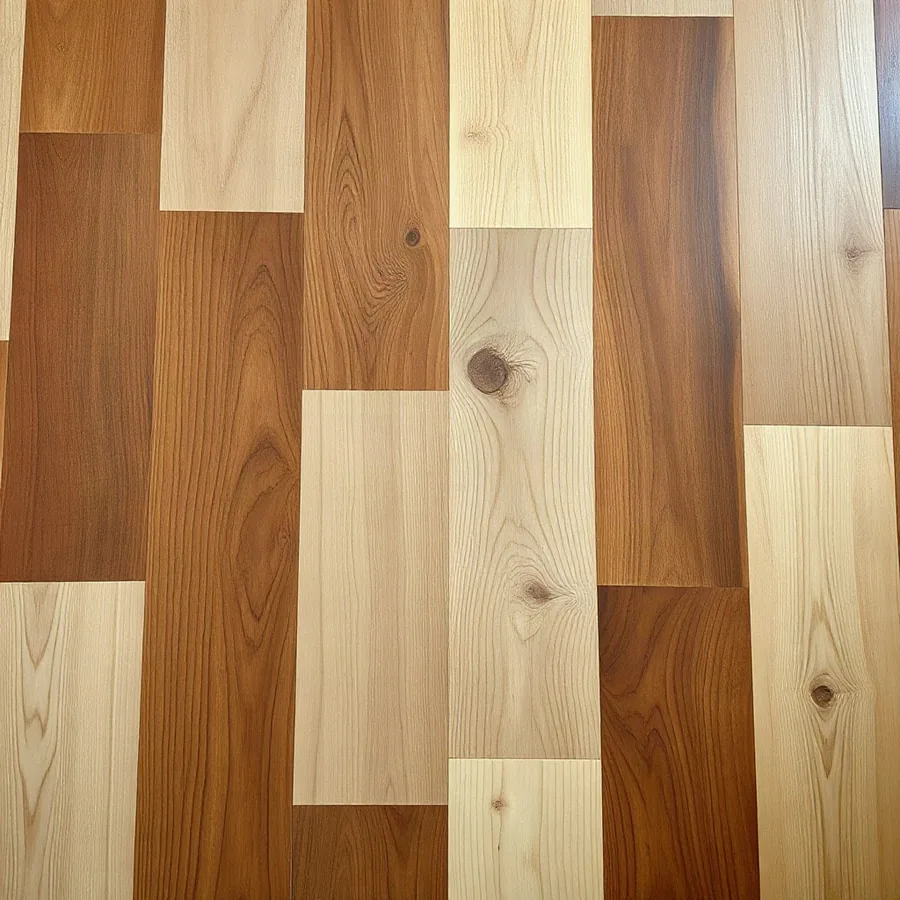
Yes, the whole metro. Ankeny, West Des Moines, Urbandale, Waukee, Johnston, Clive and out to Adel, Indianola and Polk City. There are 36 areas listed on this site.
Tell us what you need. We answer the same day, the free estimate is on site, and nobody chases you afterwards.